No. 03of our darkest
Chama, NM
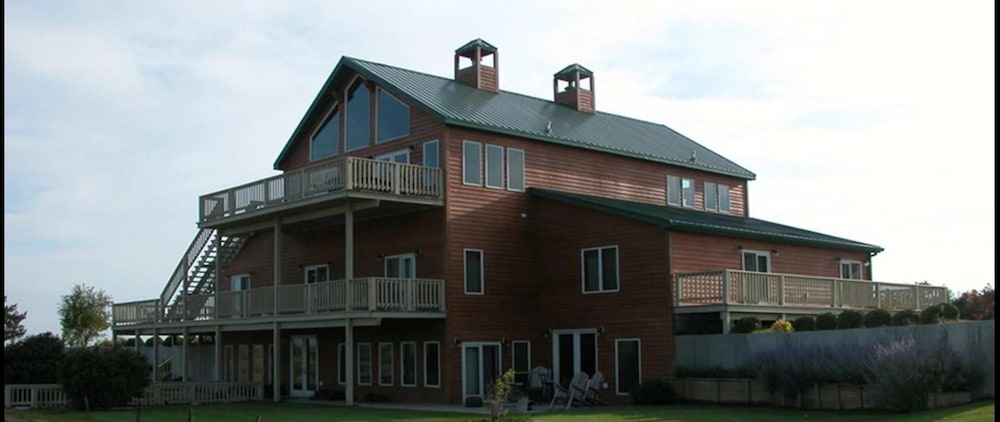
Corkins Lodge
36°44′37″ N 106°26′14″ W

- The night
- Very dark sky
- The drive
- 3 h 15 min from Albuquerque
- Clear nights
- Clearest April to June, roughly 55% clear.Clear roughly 60% of October nights.
Dark Skies · An Analog Escapes field guide
Past the last streetlight, where the road ends and cell service fades, the sky comes back. Here are our stays under the darkest skies we've measured, and the nights to go.
Our darkest sky 38°20′52″ N 107°21′49″ W · Cimarron, CO
The basics
Not much, and that's the point. Take away the lights, wait for the Moon to set and let the air clear. Four things decide how many stars you'll see:
Every town lights the sky above it, and the glow carries for dozens of miles. The darkest skies are where the road ends: far from cities, behind ridges, past the last streetlight.
A full moon washes out all but the brightest stars. Go in the week around a new moon, when the evening sky is truly dark.
Cloud, haze and humidity scatter light back down. Dry, high country and crisp autumn nights are usually clearest.
It takes about twenty minutes in the dark for your eyes to adjust. Leave the phone inside; one glance at a screen starts the clock again.
Our darkness scale
We measure every stay's night sky with our own Dark Sky Index, from satellite maps of the lights below. Each window shows about as many stars as you'd see there on a clear, moonless night.
Milky Way Hidden. The brighter stars and the planets.
38 stays
Milky Way Faint overhead, and only on the clearest nights.
67 stays
Milky Way Faint. Town lights wash out the faintest stars.
61 stays
Milky Way Visible on clear, moonless nights; a little glow low down.
35 stays
Milky Way Stands out clearly on a clear, moonless night.
13 stays
Milky Way Bright and full of detail, horizon to horizon.
2 stays
Our labels lean cautious. Where we call a sky dark, ground measurements read at least that dark on average; some of our “Very dark” skies are darker still. Moonlight, cloud and a neighbour's porch light aren't in the index.
After dark
No. 03of our darkest
Chama, NM
36°44′37″ N 106°26′14″ W
No. 02of our darkest
Terlingua, TX
29°19′44″ N 103°37′08″ W

No. 01of our darkest
Cimarron, CO
38°20′52″ N 107°21′49″ W

Ranked by our Dark Sky Index
50 of our stays sit under a dark sky or darker. Here they are, darkest first: narrow them to a region, or to an easy drive from home.
50 stays under dark skies, darkest first.
No. 01Truly dark skyArrowhead Mountain LodgeCimarron, CO38°20′52″ N 107°21′49″ W4 h 25 min from Colorado SpringsClearest: June (~60%)No. 02Truly dark skyCamp ElenaTerlingua, TX29°19′44″ N 103°37′08″ W5 h 15 min from El PasoClearest: October and November (~60%)No. 03Very dark skyCorkins LodgeChama, NM36°44′37″ N 106°26′14″ W3 h 15 min from AlbuquerqueClearest: April to June (~55%) No. 04Very dark skySteamboat InnIdleyld Park, OR43°20′27″ N 122°44′39″ W2 h 45 min from BendClearest: July and August (~65%)
 No. 05Very dark skySun Mountain LodgeWinthrop, WA48°28′38″ N 120°15′23″ W3 h 50 min from SpokaneClearest: July (~55%)
 No. 06Very dark skyUnder Canvas Grand CanyonValle, AZ35°39′16″ N 112°09′18″ W1 h 10 min from FlagstaffClearest: May and June (~75%)
 No. 07Very dark skyReWild RanchSargent, NE41°39′52″ N 99°18′38″ W3 h 40 min from OmahaClearest: July to September (~45%)
 No. 08Very dark skyThe Bali House and Cottage at Kehena BeachKehena, HI19°23′38″ N 154°55′50″ WClearest: January (~45%)
 No. 09Very dark skyAbbot Trailside LodgingAbbot Village, ME45°12′39″ N 69°27′09″ W2 h 25 min from Portland, MEClearest: July to September (~35%)
 No. 10Very dark skyBeyul RetreatMeredith, CO39°20′40″ N 106°40′32″ W4 h from DenverClearest: June (~60%)
 No. 11Very dark skyOfland EscalanteEscalante, UT37°46′35″ N 111°38′18″ W4 h 55 min from Las VegasClearest: August and September (~65%)
 No. 12Very dark skySnow Goose Lodge at Gamekeeper's MarshJamestown, KS39°41′12″ N 97°54′13″ W3 h 10 min from OmahaClearest: September (~55%)
When to go
A dark sky needs a clear night. Across our darkest stays, July brings the most clear nights (roughly 45%) and February the fewest. Pair a clear month with a new moon.
| Area | January | February | March | April | May | June | July | August | September | October | November | December |
|---|---|---|---|---|---|---|---|---|---|---|---|---|
| Volcano & Puna, HI | 35% | 25% | 25% | 10% | 20% | 20% | 25% | 25% | 25% | 20% | 25% | 30% |
| Tetons & Yellowstone, WY | 20% | 20% | 25% | 35% | 35% | 45% | 60% | 55% | 50% | 40% | 15% | 20% |
| Bryce & Escalante, UT | 40% | 40% | 45% | 50% | 60% | 70% | 55% | 65% | 65% | 60% | 45% | 50% |
| Itasca & Bemidji, MN | 20% | 15% | 20% | 35% | 40% | 40% | 45% | 40% | 40% | 30% | 20% | 20% |
| Paradise Valley, MT | 20% | 20% | 20% | 30% | 30% | 35% | 55% | 55% | 45% | 35% | 25% | 20% |
| Redwood Coast, CA | 25% | 15% | 20% | 25% | 35% | 35% | 55% | 50% | 55% | 35% | 20% | 25% |
Share of nights mostly clear (%). Brightest cell: the area's clearest month. From ten years of cloud records (ERA5, 2016–2025), good to about ±15 points.
The next three months
Plan around the Moon. The week either side of a new moon is the darkest; the big meteor showers are best far from town, after midnight, lying back on a blanket. Next up: the dark week of Nov 6–12.
Dates in US Central time. Moon phases worked out from the standard astronomical formulas; moonrise and moonset are rough, to the hour. Meteor rates are the most you'd see under a perfectly dark sky; expect fewer.
Analog Escapes
Somewhere out there the road turns to gravel, the bars on your phone drop to none, and the sky fills in. We'll keep a cabin warm for you.